

Europe's castles offer an extraordinary glimpse into centuries of royal ambition, military conflict, political intrigue, and architectural innovation. From imposing fortresses built to withstand invasions to elaborate residences created for kings and queens, every castle has its own character and history. Many remain remarkably well preserved, allowing visitors to walk through grand halls, defensive towers, courtyards, and gardens. Surrounded by mountains, forests, cities, or countryside, Europe's most impressive castles can become unforgettable vacation destinations.
Neuschwanstein Castle, Germany
Perched above the village of Hohenschwangau in Bavaria, Neuschwanstein Castle is one of the most recognizable castles in the world. Its towers, dramatic mountain setting, and elaborate interiors give it the appearance of a storybook palace.
King Ludwig II of Bavaria commissioned Neuschwanstein during the 19th century, making it considerably younger than many of Europe's medieval castles. Rather than serving primarily as a defensive fortress, it was designed as a romanticized retreat inspired by medieval architecture, German legends, and the operas of composer Richard Wagner.
Visitors can tour parts of the castle's elaborate interior, including the Throne Hall and Singers' Hall. The surrounding landscape is just as memorable. Mountains, forests, lakes, and valleys provide numerous opportunities for photography. Marienbrücke, or Mary's Bridge, is particularly famous for its view of the castle, although access can sometimes be affected by weather or maintenance.
Because Neuschwanstein is extremely popular, booking tickets in advance and arriving early can make the experience easier, particularly during the busy summer months.
Edinburgh Castle, Scotland
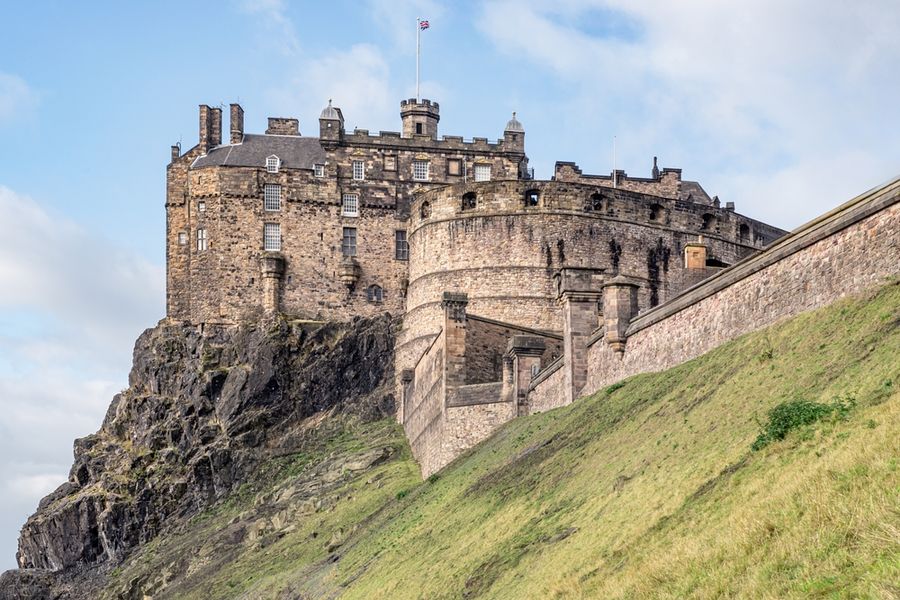
Sitting high above Scotland's capital on Castle Rock, Edinburgh Castle has witnessed centuries of warfare, royal ceremonies, political upheaval, and national history.
The castle's elevated position makes it a dominant feature of Edinburgh's skyline. Its strategic location was enormously valuable historically, providing defenders with commanding views of the surrounding area. Today, visitors can explore numerous attractions within the castle complex. Highlights include the Great Hall, St. Margaret's Chapel, the Royal Palace, and Scotland's Crown Jewels, known as the Honours of Scotland.
The castle is also home to the famous One O'Clock Gun tradition. Its military history remains evident throughout the complex, making Edinburgh Castle particularly interesting for travelers fascinated by battles, fortifications, and Scottish history.
Its location at one end of the Royal Mile makes it convenient to combine with other major Edinburgh attractions. After leaving the castle, visitors can continue through the Old Town to discover historic streets, churches, museums, restaurants, and shops.
Château de Chambord, France
France's Loire Valley is filled with spectacular châteaux, but Château de Chambord stands out for its enormous scale and unmistakable architecture. Construction began during the reign of King Francis I in the 16th century. Rather than resembling a purely defensive medieval fortress, Chambord reflects the elegance and creativity associated with the French Renaissance.
The château is famous for its elaborate roofline, numerous towers and chimneys, grand rooms, and extraordinary double-helix staircase. Leonardo da Vinci has long been associated with the staircase's design, although the precise extent of his involvement remains uncertain.
Visitors can wander through the château's interior before heading outside to appreciate the enormous estate. Formal gardens and surrounding landscapes provide a different perspective on the building's scale.
Chambord can be visited as part of a broader Loire Valley itinerary incorporating other famous properties such as Château de Chenonceau, Château de Blois, and Château d'Amboise. Travelers interested in royal history, architecture, gardens, and French countryside scenery could easily spend several days exploring the region.
Windsor Castle, England
Few European castles have such a direct connection between centuries of royal history and the modern era as Windsor Castle. Located west of central London, it has been associated with the British monarchy for approximately 900 years and remains a working royal residence.
William the Conqueror established the original castle following the Norman conquest of England. Over subsequent centuries, numerous monarchs expanded, rebuilt, and redesigned different parts of the complex.
Depending on access and royal activities, visitors may be able to tour the magnificent State Apartments, which contain impressive works of art and elaborate furnishings. St. George's Chapel is another major highlight and has been the setting for royal weddings, ceremonies, and burials.
The castle's scale becomes particularly apparent when viewed from the surrounding town or the Long Walk.
Windsor is also relatively easy to reach from London, making the castle a practical day trip for travelers staying in the capital. Spending additional time in Windsor allows visitors to enjoy the riverside setting and historic town center as well.
Alcázar of Segovia, Spain
Rising dramatically above the Spanish city of Segovia, the Alcázar is instantly recognizable because of its distinctive shape, towers, and hilltop location. Parts of the building resemble the bow of a ship extending above the surrounding landscape.
The site has served numerous purposes over the centuries, including as a fortress, royal palace, prison, and military academy. Several Spanish monarchs were closely associated with the Alcázar, giving it an important place in the country's royal history.
Visitors can explore decorated rooms, courtyards, historic collections, and defensive areas. Climbing the Tower of Juan II rewards visitors with expansive views over Segovia and the surrounding countryside.
The city itself adds considerably to the appeal of a visit. Segovia is also home to an extraordinary Roman aqueduct and an impressive Gothic cathedral.
Because Segovia is accessible from Madrid, the Alcázar is a popular day-trip destination. However, spending a night in the city allows more time to appreciate its historic streets after many daytime visitors have departed.
Pena Palace, Portugal
High in the hills of Sintra, Pena Palace is one of Europe's most colorful royal landmarks. Its bright exterior, decorative towers, arches, terraces, and mixture of architectural influences immediately distinguish it from more traditional stone castles.
King Ferdinand II transformed the site during the 19th century, creating an elaborate Romanticist palace surrounded by extensive parkland.
Visitors can tour palace interiors and walk along terraces offering views across the Sintra hills and, in clear conditions, toward the surrounding region. The extensive park contains winding paths, trees, gardens, and viewpoints worth allowing extra time to experience.
Sintra itself is filled with historic properties, including the Castle of the Moors and Quinta da Regaleira. Its proximity to Lisbon makes it one of Portugal's most popular day trips.
Crowds can be substantial, so reserving tickets ahead of time and visiting outside peak periods can make exploring Pena Palace more enjoyable.
Buda Castle, Hungary
Overlooking the Danube from Castle Hill, Buda Castle is one of Budapest's defining landmarks. The palace complex has experienced repeated destruction, reconstruction, and transformation as Hungary passed through different eras of political and military change.
Rather than functioning solely as a preserved royal residence, the complex now houses major cultural institutions, including the Hungarian National Gallery and Budapest History Museum.
The wider Castle District is equally important to the experience. Visitors can walk through historic streets and continue toward Matthias Church and Fisherman's Bastion, where terraces provide some of Budapest's most recognizable views across the Danube toward the Hungarian Parliament Building.
Visiting around sunset or after dark can be particularly memorable, when illuminated buildings along both sides of the river transform the cityscape.
Centuries of European History in One Vacation
Europe's castles demonstrate just how varied the continent's history and architecture can be. Scotland's Edinburgh Castle tells stories of warfare and national identity, while France's Château de Chambord reflects Renaissance luxury. Neuschwanstein captures the imagination with its romantic design, Predjama surprises visitors with its cave setting, and Windsor continues a royal tradition stretching across centuries.
Whether the goal is discovering medieval fortifications, wandering through royal apartments, photographing spectacular architecture, or simply imagining what life might have been like hundreds of years ago, visiting a historic castle can provide a remarkable connection to Europe's past.